| Wearable Inertial Measurement Units |
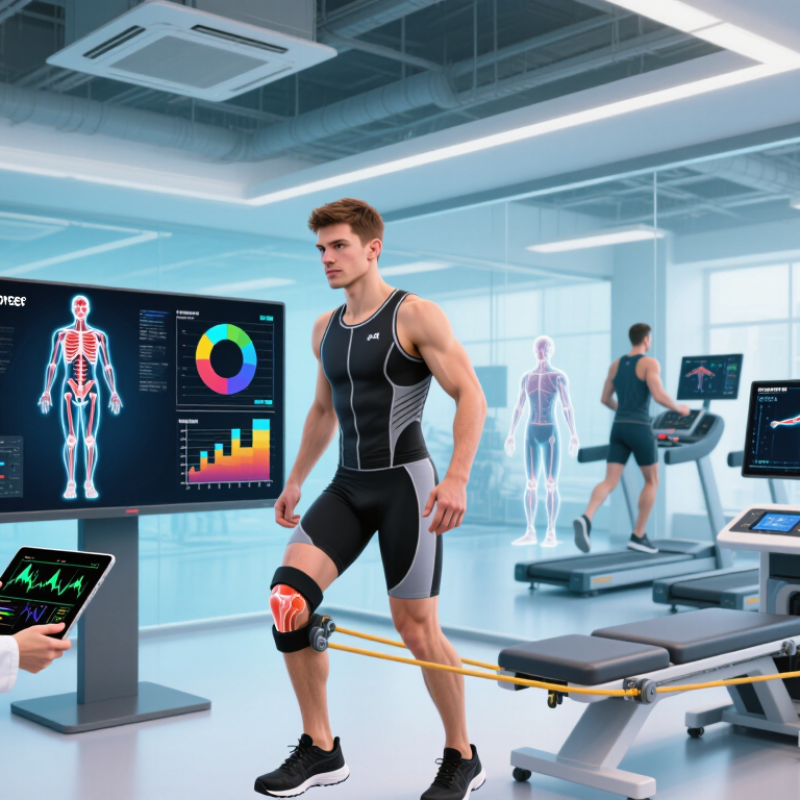
Gait analysis, running mechanics, jump assessment, return-to-play monitoring, and movement symmetry evaluation. |
Acceleration, angular velocity, orientation, step time, stride length, joint or segment movement, asymmetry, and jump height estimates. |
Common sampling rates range from approximately 50 to 200 Hz. Multi-sensor systems can measure several body segments simultaneously. |
Enables field-based assessment without a laboratory setup and supports repeated monitoring during rehabilitation and training. |
Established |
Sensor placement repeatability, calibration workflow, sampling rate, synchronization, validation against laboratory systems, data export, and battery life. |
Results can be affected by sensor movement, placement errors, soft-tissue motion, algorithm assumptions, and differences between devices. |
| Force Plates and Portable Force Platforms |
Countermovement-jump testing, isometric strength assessment, landing analysis, balance testing, and limb-loading evaluation. |
Ground-reaction force, rate of force development, impulse, center of pressure, braking force, peak force, force-time curve, and inter-limb asymmetry. |
Laboratory force plates commonly operate at approximately 1,000 to 2,000 Hz or higher. Portable platforms may use lower rates depending on the test protocol. |
Provides objective neuromuscular performance data and can identify changes in force production during rehabilitation or fatigue monitoring. |
Established |
Load capacity, sampling frequency, calibration traceability, measurement noise, software protocol flexibility, portability, and test-retest reliability. |
Requires standardized posture and instructions. Results are sensitive to footwear, countermovement technique, fatigue, and familiarization. |
| Digital Dynamometry |
Muscle-strength testing, post-operative recovery, isokinetic or isometric assessment, and strength-ratio monitoring. |
Peak force, average force, torque, work, power, fatigue index, range of motion, and agonist-antagonist strength ratios. |
Hand-held systems commonly measure forces from 0 to approximately 500 N or more, while larger systems support substantially higher loads and controlled angular speeds. |
Improves quantification of strength deficits and supports progression criteria for rehabilitation and return-to-sport decisions. |
Established |
Force and torque range, attachment stability, joint-position control, repeatability, operator training, normative references, and reporting functions. |
Hand-held testing can be influenced by examiner strength and stabilization. Poor joint alignment can distort torque measurements. |
| Surface Electromyography |
Muscle-recruitment analysis, neuromuscular retraining, fatigue assessment, biofeedback, and technique optimization. |
Muscle activation timing, amplitude, median frequency, co-contraction, onset delay, and normalized activity relative to a maximum voluntary contraction. |
Acquisition commonly uses sampling rates around 1,000 to 2,000 Hz. Multiple wireless channels support dynamic movement testing. |
Helps clinicians evaluate activation strategies that cannot be inferred from external movement or force alone. |
Established |
Electrode quality, skin-preparation workflow, channel count, wireless reliability, crosstalk control, synchronization, and signal-processing transparency. |
Signals are affected by electrode placement, skin impedance, adipose tissue, crosstalk, perspiration, and movement artifacts. |
| Marker-Based and Markerless Motion Capture |
Biomechanical analysis, surgical planning support, gait assessment, technique review, and movement-quality scoring. |
Three-dimensional joint angles, segment velocities, range of motion, kinematic coordination, posture, and movement-phase timing. |
Marker-based laboratory systems commonly capture at approximately 100 to 250 frames per second. Markerless camera systems often operate at approximately 30 to 120 frames per second. |
Provides detailed movement analysis and can reduce dependence on subjective visual assessment when protocols are standardized. |
Growing |
Camera coverage, lighting requirements, calibration, occlusion handling, anatomical-model accuracy, export formats, and validation against reference methods. |
Markerless systems may be affected by clothing, camera angle, occlusion, lighting, and model-generalization errors. |
| Musculoskeletal Ultrasound Imaging |
Muscle architecture assessment, tendon and ligament evaluation, injury follow-up, tissue-quality monitoring, and biofeedback. |
Muscle thickness, fascicle length, pennation angle, tendon structure, tissue displacement, and blood-flow-related imaging indicators. |
Diagnostic probes frequently use operating frequencies within approximately 5 to 15 MHz, with the selected frequency depending on tissue depth and examination purpose. |
Offers real-time, radiation-free imaging that can complement clinical examination and functional testing. |
Established |
Image quality, probe selection, portability, measurement protocols, operator training, DICOM compatibility, and secure image storage. |
Measurements are operator-dependent and can vary with probe pressure, probe angle, anatomical landmarks, and examiner experience. |
| Near-Infrared Spectroscopy |
Local muscle-oxygenation monitoring, endurance assessment, recovery evaluation, and tissue-perfusion research. |
Changes in oxygenated and deoxygenated hemoglobin, tissue oxygenation trends, oxygen extraction, and reoxygenation kinetics. |
Many portable systems report at low sampling rates, commonly from approximately 1 to 10 Hz, depending on the sensor and processing method. |
Provides non-invasive information about local oxygenation that can add physiological context to workload and fatigue data. |
Growing |
Probe placement, optical path depth, motion-artifact correction, calibration, skin and adipose-tissue effects, and longitudinal consistency. |
Values are generally site-specific and are not always directly comparable across devices or body locations. |
| Heart-Rate, ECG, and Recovery Wearables |
Training-load monitoring, cardiovascular response tracking, recovery screening, and rest-period assessment. |
Heart rate, beat-to-beat intervals, heart-rate variability, resting heart rate, exertion response, and recovery trends. |
Clinical-grade ECG systems directly acquire electrical cardiac signals. Optical systems estimate pulse from blood-volume changes and can be less reliable during movement. |
Supports longitudinal monitoring when measurements are collected under consistent conditions and interpreted with training and medical context. |
Established |
Signal quality, ECG availability, skin-contact reliability, artifact filtering, battery life, data ownership, interoperability, and alert configuration. |
Heart-rate variability is highly sensitive to posture, breathing, sleep, illness, medication, stress, and measurement timing. |
| Sleep and Circadian Monitoring |
Recovery planning, fatigue-risk management, travel and time-zone adjustment, and athlete wellness programs. |
Estimated sleep duration, sleep timing, wake episodes, resting heart rate, movement, and selected heart-rate-variability trends. |
Most consumer and field systems use movement and optical pulse signals rather than full polysomnography. Clinical sleep staging requires validated multi-channel testing. |
Can reveal recovery-pattern changes over time and support individualized workload decisions when combined with subjective wellness data. |
Growing |
Validation population, sleep-detection method, comfort, data continuity, privacy controls, reporting clarity, and integration with workload systems. |
Wearable sleep-stage estimates are not equivalent to clinical polysomnography and should not be used alone for diagnosis. |
| Immersive Virtual and Augmented Rehabilitation |
Balance training, motor-control exercises, exposure-based rehabilitation, cognitive-motor tasks, and patient engagement. |
Reaction time, task completion, range of motion, balance errors, movement trajectory, adherence, and progression level. |
Six-degrees-of-freedom tracking is commonly used for spatial interaction. Visual refresh rates of approximately 90 Hz or higher are desirable for comfort in many immersive systems. |
Provides repeatable, interactive exercises and immediate visual or auditory feedback during supervised or selected home programs. |
Growing |
Motion-sickness controls, accessibility, hygiene, content customization, clinician supervision, data export, and user safety. |
Some users experience cybersickness, visual discomfort, or balance risk. Engagement does not automatically demonstrate clinical effectiveness. |
| Robotic and Sensor-Assisted Rehabilitation |
Gait retraining, upper-limb therapy, assisted range-of-motion work, neurological rehabilitation, and controlled resistance training. |
Assistance level, joint position, movement velocity, repetitions, active contribution, force interaction, and task performance. |
Systems may provide programmable assistance or resistance with closed-loop control based on position, force, or movement intent. |
Enables high-repetition, measurable therapy with adjustable support and detailed session records. |
Growing |
Patient safety, emergency stop functions, adjustment range, therapist control, accessibility, maintenance, training requirements, and regulatory documentation. |
High acquisition and maintenance costs, space requirements, fitting complexity, and the need for trained clinical staff can limit adoption. |
| Thermal, Compression, and Recovery Monitoring Systems |
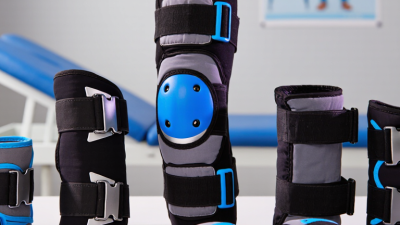
Post-exercise recovery, swelling observation, localized temperature monitoring, compression management, and recovery protocol tracking. |
Skin-surface temperature, temperature asymmetry, compression pressure where measured, limb circumference, session duration, and perceived recovery. |
Temperature sensors measure surface conditions rather than deep tissue temperature. Compression outcomes depend on garment fit, limb shape, posture, and applied pressure. |
Can standardize selected recovery routines and provide objective context for swelling or local thermal changes. |
Growing |
Sensor accuracy, pressure verification, fit range, cleaning requirements, skin safety, data logging, and protocol consistency. |
Surface temperature and compression readings are not direct measures of tissue healing or athletic readiness. |
| AI-Assisted Clinical and Performance Analytics |
Movement classification, injury-risk screening support, workload trend detection, rehabilitation progression, and automated report generation. |
Pattern scores, deviations from baseline, movement classifications, trend alerts, adherence indicators, and predicted performance markers. |
Performance depends on training data, sensor quality, model version, population similarity, and the definition of the target outcome. |
Can reduce manual analysis time and make large longitudinal datasets easier to review. |
Emerging |
External validation, explainability, false-alert rate, demographic performance, human oversight, cybersecurity, audit trails, and regulatory classification. |
Algorithmic outputs are not diagnoses. Models may perform poorly when applied to different sports, populations, devices, or clinical settings. |
| Tele-Rehabilitation and Remote Patient Monitoring |
Home exercise supervision, follow-up care, adherence monitoring, remote symptom review, and distributed sports medicine services. |
Exercise completion, repetitions, range of motion, pain or symptom scores, heart rate, functional tests, and clinician feedback. |
Solutions commonly combine video consultation, mobile questionnaires, connected sensors, and secure cloud-based data exchange. |
Expands access to care and enables more frequent follow-up between in-person visits. |
Established |
Data protection, informed consent, connectivity requirements, accessibility, clinician workflow, interoperability, emergency escalation, and technical support. |
Remote testing may lack palpation, direct examination, and controlled measurement conditions. Digital access varies across regions and patient groups. |
| Integrated Data Platforms and Interoperability |
Combining clinical records, wearable data, force testing, imaging, wellness information, and performance reports. |
Longitudinal patient profiles, synchronized sessions, workload trends, rehabilitation milestones, alerts, and outcome dashboards. |
Interoperable systems may use structured data exchange, application programming interfaces, standardized timestamps, and role-based access control. |
Improves continuity of care and supports decisions based on multiple data sources rather than isolated measurements. |
Growing |
Data ownership, export capability, timestamp accuracy, standards support, identity management, uptime, cybersecurity, and vendor-neutral integration. |
Data quality problems, incompatible definitions, duplicate records, and excessive alerts can reduce clinical usefulness. |