Choosing among the 7 Best Joint Reconstruction Surgery Suppliers Worldwide requires more than comparing product catalogs. Hospitals must examine implant design, manufacturing controls, clinical evidence, and long-term support. A polished brochure cannot replace verified performance.
This guide explores suppliers connected with joint reconstruction surgery, including hip, knee, shoulder, and revision systems. It considers material quality, sterilization practices, traceability, surgeon training, and postoperative resources. Reliable suppliers usually provide transparent documentation and responsive technical teams. They also understand that every patient presents different anatomy, activity levels, and medical risks.
The comparison is not a promise of identical outcomes. Surgical results depend on clinical judgment, patient health, hospital protocols, and rehabilitation. Even advanced implants can fail when follow-up care is weak. That point deserves attention.
We also assess regulatory compliance across major markets. Approval in one region does not automatically confirm suitability elsewhere. Independent clinical studies, published safety data, and realistic warranty terms matter. So does the supplier’s record during product recalls or design revisions.
Some rankings may remain imperfect. Public information differs between companies, and private performance data is often limited. Readers should verify current certifications, local registration, and surgeon feedback before making procurement decisions. Price alone can be misleading. A lower purchase cost may create higher training, revision, or inventory expenses later.
This overview aims to support careful evaluation, not replace professional medical or procurement advice. The best supplier is usually the one that combines dependable products, transparent evidence, and practical support throughout the patient journey.

Joint reconstruction surgery suppliers provide more than implants. Their scope covers artificial joints, fixation systems, surgical instruments, digital planning tools, and sterile packaging. Many also support surgeon training, inventory control, traceability, and post-market surveillance. The boundary is not always clean. Some suppliers manufacture components, while others coordinate design, logistics, and clinical support.
The World Health Organization reported in 2022 that about 1.71 billion people live with musculoskeletal conditions. This large clinical burden drives demand for hip, knee, shoulder, and other reconstruction systems.
Grand View Research’s 2024 analysis estimated the global orthopedic implants market at tens of billions of US dollars, with joint replacement representing a major segment. Market figures differ across reports. That matters when comparing suppliers.
A credible supplier should demonstrate validated materials, documented quality systems, and evidence from clinical follow-up. It should also show reliable manufacturing capacity across multiple regions. Surgeons may examine implant geometry, wear resistance, instrument ergonomics, and revision options. Hospitals often assess delivery accuracy, sterilization controls, training quality, and complaint handling. Regulatory authorization remains essential, but approval alone does not prove long-term performance. That is an uncomfortable limitation.
Supplier evaluation should include registry data, peer-reviewed studies, audit records, and transparent risk communication.
The National Joint Registry’s annual reports show why revision rates and implant survivorship deserve close attention. A polished catalogue is not enough. Real-world evidence can be incomplete, delayed, or difficult to compare across countries.
7 Best Joint Reconstruction Surgery Suppliers Worldwide?
Choosing among global joint reconstruction suppliers requires more than comparing catalogues or prices. Evaluate documented clinical evidence, quality systems, and regulatory approvals relevant to each target market. ISO 13485 certification is useful, but it should not end the review. Ask for audit results, device traceability, sterilization records, and post-market surveillance data. A supplier should explain how it investigates complaints and manages product changes. That response reveals practical maturity.
Tips: Request sample technical files, surgeon training plans, and realistic delivery timelines. Check whether local representatives can support hospitals during implantation and follow-up. Small details matter, such as packaging labels, instrument availability, and replacement procedures.
Experience in orthopaedic procurement shows that communication can affect patient care. A technically strong supplier may still struggle with customs documents, language barriers, or urgent inventory needs. Review manufacturing capacity and backup production sites. Confirm that implants and instruments fit the hospital’s surgical workflow. Clinical training should include handling guidance, imaging considerations, and documented competency checks. References from comparable hospitals can add useful context, but they need independent verification. Prices can be misleading when revision support, training, and inventory storage are excluded. I would also question suppliers promising flawless outcomes. Surgery remains dependent on patient factors, surgical judgment, and long-term monitoring. Some evaluation decisions may feel subjective. Record the reasoning, revisit assumptions, and involve surgeons, quality specialists, and procurement staff.
| Rank | Supplier Profile | Primary Manufacturing Region | Core Joint Reconstruction Portfolio | Material & Processing Capability | Quality-System Evidence to Verify | Regulatory Market Coverage | Clinical & Technical Documentation | Traceability & Supply Continuity | Best-Fit Buyer | Evaluation Score |
|---|---|---|---|---|---|---|---|---|---|---|
| 1 | Profile A | Western Europe | Total hip, total knee, revision components, trauma-related reconstruction systems | Cobalt-chromium alloys, titanium alloys, stainless steel, UHMWPE, porous or hydroxyapatite-coated surfaces; CNC machining and additive manufacturing support | ISO 13485 certification, audited supplier controls, validated sterilization and packaging processes, documented CAPA and complaint handling | Strong readiness for EU MDR, United Kingdom, United States, Canada, Australia, and selected Asian markets; verify product-specific registrations | Implant specifications, surgical technique guides, risk-management files, biocompatibility evidence, mechanical testing, and post-market surveillance records | Lot-level implant and instrument traceability, controlled change notification, multi-site sourcing for critical materials, documented recall procedures | Hospitals and distributors requiring broad regulatory coverage and mature documentation | 9.4 / 10 |
| 2 | Profile B | North America | Primary and revision knee systems, hip stems and cups, patient-matched planning support | Titanium and cobalt-chromium components, medical-grade polyethylene, porous fixation surfaces, precision forging and machining | ISO 13485 or equivalent quality-system evidence, FDA establishment and product records where applicable, process validation, supplier qualification | Established United States and Canadian pathways; verify FDA listing, clearance or approval status for each product family | Detailed mechanical performance data, surgical instrumentation documentation, human-factors records, clinical literature, and adverse-event monitoring | High inventory visibility, barcode or UDI support where required, documented distribution controls, and formal business-continuity planning | Healthcare systems prioritizing local support, regulatory familiarity, and surgeon-training infrastructure | 9.2 / 10 |
| 3 | Profile C | East Asia | Hip and knee implants, revision trays, orthopedic instruments, and contract manufacturing services | Titanium, cobalt-chromium, stainless steel, UHMWPE, additive-manufactured porous structures, automated surface finishing | ISO 13485, documented cleanroom controls, metrology records, process capability studies, sterilization validation, and internal audit history | Strong access to Asian markets; international expansion depends on product-specific approvals, local representatives, and technical-file completeness | Material certificates, dimensional inspection reports, fatigue and wear testing, risk analysis, verification and validation reports | Competitive production capacity, dual-source planning for key raw materials, export packaging controls, and documented delivery performance | Importers and distributors seeking scalable manufacturing with technical customization | 8.8 / 10 |
| 4 | Profile D | Central Europe | Knee and hip reconstruction platforms, revision implants, bone-conserving designs, surgical instruments | Forged titanium and cobalt-chromium, medical polyethylene, ceramic-bearing options, polished and porous fixation technologies | ISO 13485, EU MDR technical documentation, risk-management compliance, validated packaging, and post-market surveillance procedures | EU and neighboring European markets; verify notified-body status, certificate scope, and availability of an authorized representative where required | Long-term clinical follow-up, implant survivorship evidence, wear testing, usability validation, and documented design history | Strong engineering change control, serial and lot traceability, instrument-set management, and regional warehouse support | European hospitals requiring MDR-aligned documentation and complex revision capability | 8.7 / 10 |
| 5 | Profile E | East Asia | Cost-optimized hip and knee systems, trauma-reconstruction products, and private-label manufacturing | Titanium alloys, stainless steel, cobalt-chromium, UHMWPE, CNC machining, casting, forging, and coating subcontractor controls | ISO 13485, incoming-material inspection, first-article inspection, batch release procedures, and validated cleaning and packaging | Suitable for markets accepting recognized international quality evidence; local registration and clinical requirements must be assessed separately | Technical drawings, certificates of analysis, biocompatibility testing, mechanical test reports, and supplier-provided risk files | High-volume production potential, but buyers should verify capacity reservations, inspection independence, and backup suppliers | Distributors and private-label buyers focused on cost control and configurable product ranges | 8.3 / 10 |
| 6 | Profile F | Latin America | Primary knee and hip implants, trauma accessories, revision instruments, and regional customization | Stainless steel, titanium, cobalt-chromium, polymer bearing components, conventional machining, and outsourced specialty coatings | ISO 13485 where applicable, national health-authority licensing, sterilization validation, complaint records, and supplier-audit reports | Strong regional access; international acceptance depends on export registrations, authorized representatives, and conformity documentation | Product specifications, material certificates, usability documents, surgical instructions, and available local clinical experience | Regional inventory and responsive service; verify import documentation, customs capability, and continuity of critical components | Regional hospital networks seeking shorter local distribution routes and responsive technical service | 7.9 / 10 |
| 7 | Profile G | Middle East & South Asia | Standard hip and knee systems, revision accessories, surgical instruments, and distributor-led support | Titanium, stainless steel, cobalt-chromium, UHMWPE, conventional machining, and externally validated surface treatments | ISO 13485 verification, national manufacturing license, sterilization and packaging records, inspection plans, and corrective-action procedures | Good potential for regional markets; confirm country-specific registration, import permits, labeling, and local clinical requirements | Basic technical files, material and biocompatibility evidence, surgical instructions, and distributor training documentation | Flexible order quantities and regional distribution support; verify production capacity, lead-time commitments, and post-market reporting | Emerging-market buyers prioritizing flexible commercial terms and regional availability | 7.6 / 10 |
Worldwide demand for joint reconstruction is expanding with aging populations and longer life expectancy. The World Health Organization reports that musculoskeletal conditions affect approximately 1.71 billion people globally. This figure includes osteoarthritis, a major driver of hip and knee replacement procedures. A practical review of seven leading supplier groups should examine implant engineering, revision systems, surgical navigation, robotic assistance, patient-specific planning, sterile instrument logistics, and surgeon training.
Reliable suppliers usually provide more than polished implants. They offer tested materials, traceable manufacturing, validated sterilization processes, and responsive clinical support. The Organisation for Economic Co-operation and Development notes substantial differences in joint replacement rates between countries. Therefore, suppliers must adapt to local hospital capacity, reimbursement structures, and surgeon experience. The UK National Joint Registry also demonstrates the value of long-term outcome tracking, especially for revision rates, implant survival, and patient-reported recovery.
Evidence matters more than marketing.
In practical evaluations, hospitals should request peer-reviewed data, registry participation, fatigue-testing results, and clear post-market surveillance procedures. Surgical teams also need compatible instruments that feel balanced in the hand, reliable trial components, and predictable delivery schedules. A supplier may appear technologically advanced yet perform poorly in training or inventory control. That weakness is easy to overlook. No global ranking remains permanent, because clinical evidence, regulation, pricing, and service quality continue to change. The strongest seven suppliers are those that combine measurable outcomes with honest limitations and dependable support.
7 Best Joint Reconstruction Surgery Suppliers Worldwide?
Comparing seven leading joint reconstruction suppliers requires more than counting implants. Product portfolios should cover primary and revision procedures, with compatible stems, liners, augments, and fixation options. Grand View Research estimated the global joint replacement market at about USD 20.8 billion in 2023. That growth increases choice, but also complicates evaluation.
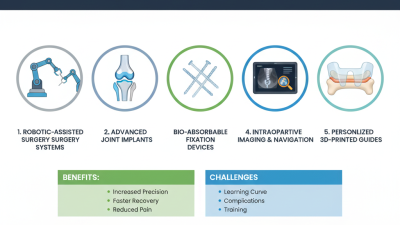
Technology differences appear in the operating room. Porous coatings may support biological fixation, while ceramic bearings can reduce wear in selected patients. Navigation, robotic assistance, and patient-specific instruments may improve planning, yet clinical value depends on training and case selection. The 2023 AAOS guideline on surgical management of osteoarthritis supports shared decision-making, not technology hype. A polished portfolio can still hide gaps.
Clinical support deserves equal weight. Strong suppliers provide cadaver training, digital planning, instrument logistics, and accessible technical specialists. They should also share survivorship, revision, and adverse-event data. The OECD’s Health at a Glance 2023 reports substantial variation in hip and knee replacement rates across countries, reflecting different patient needs and healthcare systems. Local evidence matters. It is easy to overvalue a smooth sales presentation. Sometimes, basic tray reliability matters more. Procurement teams should inspect registry participation, sterilization workflows, surgeon training records, and response times during urgent revisions. No supplier is perfect.
Product portfolios, technologies, and clinical support compared through publicly documented reconstruction capabilities
Selecting a joint reconstruction surgery supplier begins with patient needs, not catalog size. Review implant materials, fixation methods, sizing ranges, and compatibility with existing instruments. Ask for peer-reviewed evidence, long-term registry data, and clearly stated limitations. Clinical teams should examine outcomes across age groups, bone quality, and revision cases. Numbers matter. So does context. Surgeons, nurses, procurement leaders, and infection-control staff should evaluate the supplier together. Their experience often reveals practical problems that brochures miss.
A reliable supplier can show regulatory authorization, batch traceability, sterilization controls, and documented quality audits. Request sample certificates and test response time through a simulated recall. This small exercise exposes weak communication. Hospitals should assess surgeon training, operating-room support, and instrument availability during urgent cases. Ask how quickly replacements arrive locally. Check inventory policies, storage requirements, and expiration controls. A strong technical representative explains risks without promising perfect results. That honesty is valuable.
Cost comparisons should include training, loaner instruments, revision procedures, freight, and service agreements. The lowest quotation may become expensive after delays or unfamiliar equipment. Hospitals can score suppliers against weighted criteria and document each decision. Independent references help, but they are not enough. Speak with facilities of similar size and surgical volume. No supplier is flawless. We should admit that early. A careful pilot, monitored through outcome data and staff feedback, may reveal assumptions procurement teams missed. Contracts should define performance measures, complaint handling, and corrective actions before routine adoption.