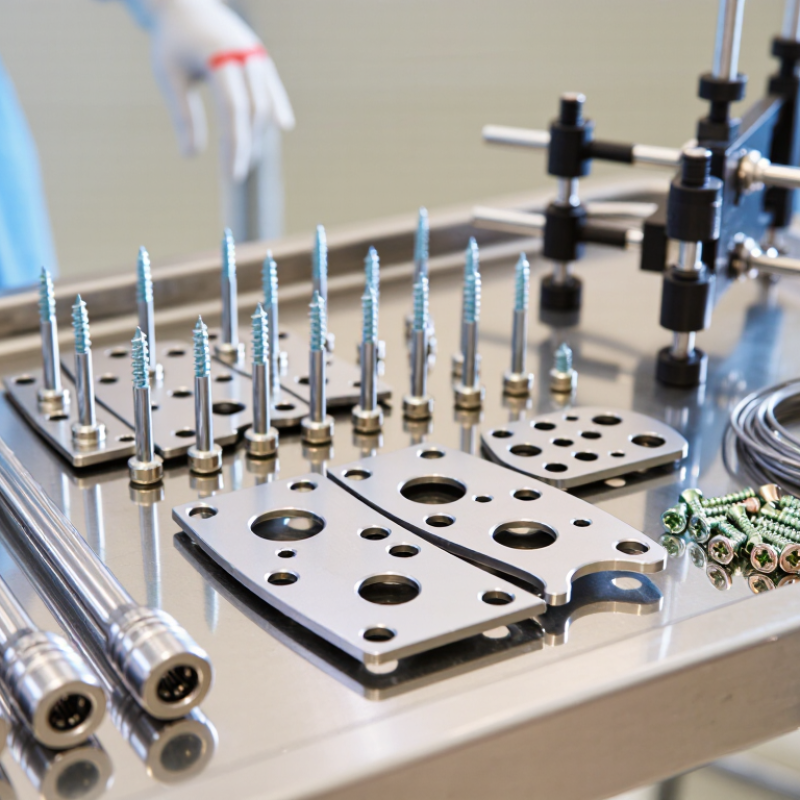
| Bone Plates and Bone Screws |
Fracture fixation, osteotomy stabilization, and reconstruction of long bones, small bones, and periarticular regions. |
Titanium alloys
Stainless steel
Cobalt-chromium alloys
Resorbable polymers
|
Plate geometry, hole pattern, locking or non-locking screw interface, screw diameter, thread profile, length, and angular stability. |
ASTM F382 for metallic bone plates; ASTM F543 for metallic bone screws; ISO 14630 for general requirements for non-active surgical implants; ISO 10993 for biological evaluation. |
Implant systems should be supplied in validated sterile barrier packaging when labeled sterile. Common sterilization methods include moist heat, ethylene oxide, or radiation, subject to material and packaging validation. |
Classification and clearance requirements vary by intended use, anatomical site, material, and market. In the United States, many conventional fixation systems are regulated as Class II devices, but classification must be confirmed for the specific product. |
Confirm fatigue testing, torsional and insertion testing, corrosion resistance, material certificates, MRI labeling, traceability, and compatibility between plates, screws, and instruments. |
| Intramedullary Nails |
Stabilization of fractures of the femur, tibia, humerus, and other long bones using an implant positioned inside the medullary canal. |
Titanium alloys
Stainless steel
Cobalt-chromium alloys
|
Nail diameter and length, curvature, locking-hole configuration, end-cap design, and proximal or distal targeting geometry. |
ISO 14630; ISO 5832 series for metallic materials used in surgical implants; ASTM F1264 for intramedullary fixation devices where applicable; ISO 10993. |
Long, narrow implants require packaging that prevents bending, surface damage, and particulate contamination. Sterilization validation must cover the complete packaged configuration. |
Regulatory submissions generally require mechanical performance data, anatomical and dimensional justification, risk management, and evidence supporting the intended fracture indications. |
Review bending, torsional, fatigue, axial compression, locking-screw compatibility, radiographic visibility, instrument accuracy, and implant removal provisions. |
| External Fixation Systems |
Temporary or definitive stabilization of open fractures, severe soft-tissue injuries, limb-length procedures, and complex trauma cases. |
Stainless steel
Titanium alloys
Carbon-fiber composite components
Medical-grade polymers
|
Half-pins, wires, clamps, rods, rings, hinges, frame configuration, pin diameter, and working length. |
ASTM F1264 for external fixation devices; ISO 14630; ISO 10993 for patient-contacting materials; applicable sterilization standards. |
Reusable frames and instruments require validated cleaning, disinfection, sterilization, and reprocessing instructions. Single-use sterile components require sterile barrier and shelf-life validation. |
Regulatory documentation should distinguish reusable, single-use, sterile, and non-sterile components. Local rules may apply separately to implants, instruments, and accessories. |
Check clamp locking strength, pin-to-bone interface performance, radiolucency claims, reprocessing validation, corrosion resistance, and availability of replacement components. |
| Spinal Fixation Systems |
Stabilization and alignment of the spine in selected degenerative, traumatic, deformity, and reconstructive procedures. |
Titanium alloys
Cobalt-chromium alloys
Stainless steel
PEEK components
|
Screw diameter and length, rod diameter, connector type, reduction mechanism, cage geometry, and anatomical level. |
ISO 14630; ISO 10993; ASTM F1717 for spinal implant construct testing; ASTM F1798 for spinal rod-screw assemblies where applicable; ASTM F2077 for intervertebral body fusion devices where applicable. |
Packaging must protect precision threads, tulip heads, rod interfaces, and cage surfaces. Reusable instruments need validated reprocessing instructions and defined inspection criteria. |
Spinal devices often receive heightened regulatory scrutiny because of anatomical risk and construct complexity. Intended levels, surgical approach, imaging compatibility, and clinical evidence must be clearly defined. |
Verify static and fatigue testing, rod-screw compatibility, insertion torque, locking performance, imaging artifacts, material combinations, and surgeon training requirements. |
| Suture Anchors |
Soft-tissue-to-bone fixation in shoulder, knee, hip, foot, ankle, and hand procedures. |
PEEK
Titanium alloys
Bioabsorbable polymers
Suture materials
|
Anchor diameter, insertion method, number and type of sutures, eyelet configuration, knotless or knotted design, and absorption profile. |
ISO 10993; ISO 14630; ASTM F543 methods may be relevant to screw-type anchor components; product-specific pull-out, cyclic loading, and insertion testing. |
Absorbable materials require degradation, local tissue response, and mechanical-retention data. Sterile packaging must maintain integrity through the stated shelf life. |
Regulatory requirements depend on anchor material, absorbability, anatomical indication, and whether the device includes a suture or delivery instrument. |
Assess pull-out strength, cyclic displacement, insertion torque, suture abrasion, deployment reliability, radiographic visibility, and compatibility with the specified drill or inserter. |
| Maxillofacial and Cranial Fixation |
Fixation of facial fractures, cranial reconstruction, orbital repair, and selected mandibular or midface procedures. |
Titanium alloys
PEEK
Resorbable polymers
Stainless steel
|
Low-profile plates, mesh dimensions, screw diameter and length, contourability, fixation-hole layout, and patient-specific geometry. |
ISO 14630; ISO 10993; ASTM F543 for applicable metallic screws; material-specific standards in the ISO 5832 series where applicable. |
Small components require packaging controls against loss, deformation, and particulate contamination. Patient-specific or additively manufactured components may require additional process validation. |
Indications involving the orbit, cranial vault, or load-bearing mandible may require specific clinical, anatomical, and mechanical evidence in the target market. |
Confirm low-profile design, contouring limits, screw-head engagement, burr and particulate control, MRI information, and instrument compatibility. |
| K-Wires, Pins, and Cerclage Systems |
Temporary fixation, small-bone fixation, tension-band constructs, patella and olecranon procedures, and supplemental stabilization. |
Stainless steel
Titanium alloys
Cobalt-chromium alloys
Cerclage cable alloys
|
Wire or pin diameter, tip geometry, length, surface finish, bending strength, cable diameter, and tensioning mechanism. |
ISO 14630; ISO 5832 series where applicable; ISO 10993; product-specific tensile, bending, torsional, and corrosion testing. |
Sharp tips and exposed ends require packaging and handling controls. Sterile versions require validated packaging integrity and terminal sterilization or aseptic processing. |
Confirm whether the product is supplied sterile or non-sterile, single-use or reusable, and whether the labeling specifies removal, bending, or tensioning limits. |
Check dimensional tolerances, surface finish, breakage resistance, cable fatigue, tensioning accuracy, corrosion behavior, and compatibility with dedicated instruments. |
| Bioabsorbable Fixation Devices |
Selected fracture, osteotomy, soft-tissue, and ligament fixation procedures where gradual material resorption is clinically intended. |
PLLA
PDLLA
PGA copolymers
Magnesium-based alloys
|
Resorption rate, implant diameter, degradation profile, initial strength, fixation geometry, and radiographic visibility. |
ISO 10993; ISO 13781 for in-vivo degradation evaluation of absorbable polymeric implant materials; ISO 14630; applicable material and mechanical test methods. |
Moisture, temperature, and oxygen can affect degradation-sensitive materials. Packaging, shelf life, transport conditions, and storage limits require specific validation. |
Authorities may require additional evidence on degradation products, local and systemic biological response, strength retention, and the relationship between degradation and clinical healing. |
Review degradation kinetics, inflammatory response data, mechanical retention over time, storage conditions, radiographic follow-up requirements, and contraindications. |
| Patient-Specific and Additively Manufactured Fixation |
Complex cranial, maxillofacial, pelvic, and reconstructive procedures requiring anatomy-matched fixation or customized geometry. |
Titanium alloys
PEEK
Medical-grade polymers
|
Patient anatomy, digital design file, build orientation, lattice or solid geometry, surface roughness, and dimensional tolerances. |
ISO 14630; ISO 10993; ISO 14971 for risk management; ISO/ASTM 52900 series for additive manufacturing terminology and process controls where applicable. |
Manufacturing validation must address powder or resin control, cleaning, residuals, surface treatment, packaging, sterilization compatibility, and digital-file security. |
Custom-made, patient-matched, and mass-produced devices may follow different regulatory pathways. The buyer should confirm the legal definition and documentation required in each destination market. |
Verify design approval workflow, file traceability, build-record retention, dimensional inspection, material batch control, post-processing validation, and clinical responsibility allocation. |
| Reusable Fixation Instruments |
Insertion, drilling, tapping, targeting, reduction, contouring, compression, extraction, and reprocessing of fixation implants. |
Stainless steel
Aluminum alloys
Engineering polymers
Silicone seals
|
Instrument accuracy, working length, interface geometry, cannulation, torque range, cleaning access, and compatibility with implant systems. |
ISO 17664 for information supplied by the manufacturer for processing of medical devices; ISO 16061 for instruments used with non-active surgical implants; ISO 14971. |
Cleaning and sterilization instructions must be validated for the complete instrument set. Hinges, cannulations, lumens, and textured surfaces need specific inspection and cleaning methods. |
Reusable instruments may be regulated separately from implants. Labeling should state cleaning, disinfection, sterilization, maintenance, service life, and inspection requirements. |
Confirm torque calibration, wear limits, instrument-to-implant fit, replacement-part availability, reprocessing validation, and training materials. |