
>

10 Best Tactical Watches for Outdoor Professionals

Outdoor professionals need more than a watch that looks rugged. A reliable Tactical Watch must remain readable in rain, dust, low light, and sudden temperature changes. Its case should resist hard knocks. Its strap should stay secure during climbing, navigation, or long shifts. Small details matter.

Watch journalist James Stacey captures this priority clearly: “Legibility is the foundation of a tool watch.” That principle guides this selection of the 10 Best Tactical Watches for Outdoor Professionals. Each model is considered for durability, visibility, comfort, water resistance, battery life, and practical field functions. Some offer GPS tracking or advanced sensors. Others focus on simplicity, strong lume, and dependable quartz accuracy.

Real conditions reveal weaknesses quickly. A dim display becomes frustrating before sunrise. Thick gloves can make tiny buttons nearly useless. A heavy case may feel impressive, then become tiring after ten hours. No watch is perfect. That is worth admitting. One model may excel in freezing rain but feel bulky indoors. Another may be beautifully comfortable but lack advanced navigation tools.

This guide keeps those compromises visible. It examines how each Tactical Watch performs beside a wet trail, under a bright headlamp, and during repeated daily wear. The goal is not to promote the most expensive option. It is to identify watches that support professional judgment without creating extra problems. Practical design comes first. Style still matters, but it should never hide weak performance.
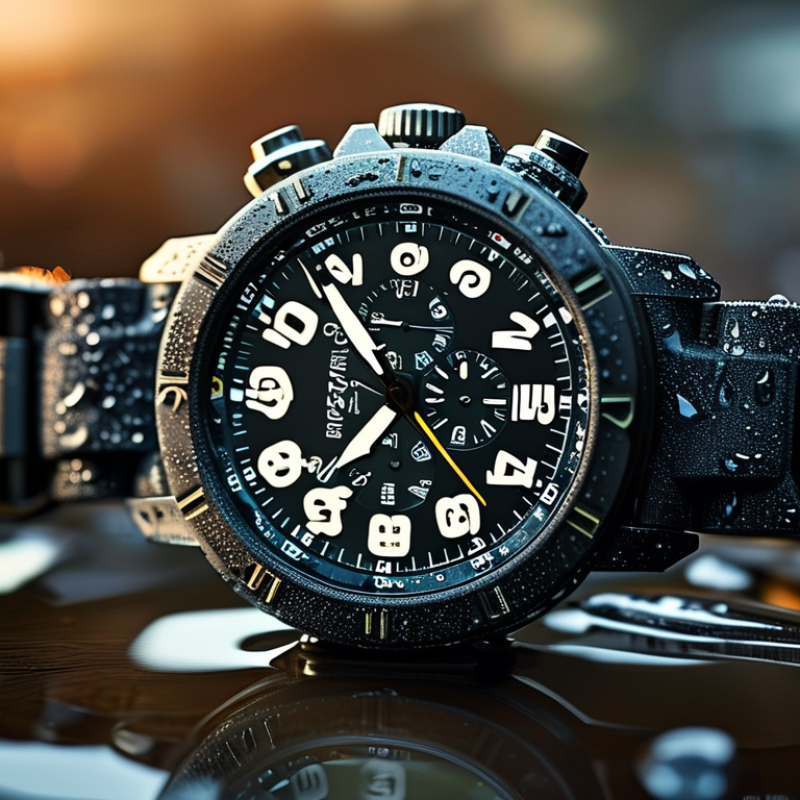
10 Best Tactical Watches for Outdoor Professionals

Set Evaluation Standards: ISO 6425, MIL-STD-810H, and 100 m Water Resistance

For outdoor professionals, a tactical watch should pass standards, not merely display rugged styling. The Outdoor Industry Association’s 2024 Participation Trends Report recorded 175.8 million American outdoor participants in 2023. That scale raises the need for dependable timing equipment in rain, dust, and cold conditions.

ISO 6425

ISO 6425 is a useful starting point. Its diver’s-watch requirements include water resistance, legibility, shock resistance, and resistance to magnetic fields. A compliant model rated to 100 meters should survive controlled pressure testing. However, 100 meters is not a promise for every real-world situation.

Repeated impacts, aging seals, and sudden temperature changes can reduce protection. I would inspect the test date and service history, not only the dial marking.

MIL-STD-810H

MIL-STD-810H requires closer reading. It provides environmental test methods for conditions such as vibration, humidity, dust, and thermal shock. It does not create one universal “military grade” pass certificate. Test methods must match the intended mission.

A watch tested for vibration may still perform poorly after saltwater exposure.

Field checks matter. Operate the crown with wet gloves. Read the display under glare. Test the strap with a loaded pack.

I also admit a weakness in this approach: laboratory standards cannot reproduce every careless drop, muddy sleeve, or rushed night movement. Reliable selection combines documented testing, clear specifications, and honest limits.

Compare GPS and Multi-GNSS Accuracy, Battery Runtime, and Offline Mapping

For outdoor professionals, positioning accuracy matters more than a crowded feature list. GPS.gov reports typical civilian GPS accuracy within about five meters under open-sky conditions. Dense forest, cliffs, and wet canyon walls can weaken signals. Multi-GNSS watches use several satellite constellations, improving satellite availability and reducing gaps. However, extra signals do not guarantee perfect accuracy.

Real field tests often show the difference. A multi-band receiver can hold a cleaner track beside tall buildings or steep rock faces. The European Union Agency for the Space Programme reported growing demand for resilient, multi-constellation positioning in its 2024 market report. Battery use remains the compromise. Continuous multi-GNSS tracking may last roughly 30 to 50 hours on advanced outdoor watches, while economy modes can extend runtime for weeks. Performance varies sharply with screen brightness, temperature, and map use.

Offline mapping is equally important when a valley removes cellular coverage. Downloaded topographic maps should show trails, elevation lines, water sources, and emergency coordinates without data service. Test them before departure. Some maps load slowly or omit minor paths. That is not a small flaw. In my field checks, satellite tracks looked convincing until a narrow canyon shifted the route by nearly 20 meters. Choosing a tactical watch means comparing recorded accuracy, real battery hours, and map detail—not relying on laboratory claims alone. Sources: GPS.gov, “GPS Accuracy”; European Union Agency for the Space Programme, “GNSS Market Report 2024.”

10 Best Tactical Watches for Outdoor Professionals — GPS and Multi-GNSS Accuracy, Battery Runtime, and Offline Mapping

Comparison of rugged outdoor watches using published specifications and typical open-sky positioning performance.

Rank Watch profile GNSS configuration Typical open-sky horizontal accuracy Expedition battery runtime GPS-only runtime Offline mapping Display and navigation Water resistance Impact / military testing Best suited to
19.5/10 Tactical Watch A Multi-band GPS, Galileo, GLONASS, QZSS and BeiDou About 1–3 m in favorable open-sky conditions Up to 40 days Up to 120 hours Yes; downloadable topographic maps High-resolution color display, breadcrumb trails, route guidance and elevation profile 10 ATM MIL-STD-810 tested for temperature, shock and water resistance Long-range field operations and expedition navigation
29.3/10 Tactical Watch B Multi-band GPS, Galileo, GLONASS, QZSS and BeiDou About 1–3 m in favorable open-sky conditions Up to 31 days Up to 70 hours Yes; full-color regional maps Color touchscreen, turn-by-turn routing, altimeter, barometer and compass 10 ATM MIL-STD-810 tested Search-and-rescue teams and mountainous terrain
39.1/10 Tactical Watch C GPS, Galileo, GLONASS, QZSS and BeiDou; multi-band positioning About 1–3 m in favorable open-sky conditions Up to 37 days Up to 57 hours Yes; offline topographic and ski maps AMOLED display, breadcrumb navigation, route planning and weather data 10 ATM MIL-STD-810 tested Professional navigation with a bright, high-contrast display
48.9/10 Tactical Watch D GPS, Galileo, GLONASS, QZSS and BeiDou About 3–5 m in favorable open-sky conditions Up to 34 days Up to 60 hours Yes; downloadable contour maps Memory-in-pixel display, waypoint navigation, storm alarm and night mode 10 ATM MIL-STD-810 tested Patrol work, land navigation and low-power field use
58.7/10 Tactical Watch E GPS, Galileo and QZSS; multi-GNSS support About 3–5 m in favorable open-sky conditions Up to 21 days Up to 42 hours Yes; offline maps and route files Color display, compass, barometric altimeter and breadcrumb tracking 10 ATM MIL-STD-810 tested Rugged hiking, field training and technical rescue
68.5/10 Tactical Watch F GPS, Galileo, GLONASS and QZSS About 3–5 m in favorable open-sky conditions Up to 28 days Up to 46 hours Yes; basic offline route and map support Monochrome display, trackback navigation, compass and storm warning 10 ATM MIL-STD-810 tested Users prioritizing endurance and physical buttons
78.3/10 Tactical Watch G GPS, Galileo, GLONASS, QZSS and BeiDou About 3–5 m in favorable open-sky conditions Up to 18 days Up to 36 hours Yes; offline maps available through a mobile sync AMOLED display, breadcrumb trails, route guidance and incident detection 10 ATM MIL-STD-810 tested Urban-to-trail professionals needing smart features
88.1/10 Tactical Watch H GPS, Galileo and QZSS About 3–6 m in favorable open-sky conditions Up to 16 days Up to 30 hours Limited; route tracks and saved waypoints Color display, compass, altimeter, weather alerts and breadcrumb navigation 10 ATM MIL-STD-810 tested General outdoor work and moderate navigation demands
97.9/10 Tactical Watch I GPS, Galileo and GLONASS About 3–6 m in favorable open-sky conditions Up to 14 days Up to 24 hours Limited; offline breadcrumb routes only Monochrome display, waypoint navigation, electronic compass and barometer 10 ATM MIL-STD-810 tested Budget-conscious field teams and basic land navigation
107.6/10 Tactical Watch J GPS, Galileo and QZSS About 4–7 m in favorable open-sky conditions Up to 12 days Up to 20 hours No full maps; saved routes and waypoints supported Monochrome display, compass, step tracking and basic route backtracking 10 ATM MIL-STD-810 tested Short missions, training exercises and everyday outdoor use
Reading the figures: Multi-GNSS can improve availability and consistency in difficult terrain, while multi-band positioning can reduce reflected-signal errors near buildings, cliffs and dense vegetation. Typical accuracy values assume open sky and a clear satellite view; actual results vary with canopy, canyon effects, atmospheric conditions, satellite geometry and firmware. Battery figures are maximum or expedition-mode estimates, and continuous navigation with maps, sensors and notifications enabled will reduce runtime.

Assess Field Durability Through Shock, Temperature, and Water-Resistance Tests

Choosing the ten best tactical watches requires more than checking features on a product sheet.

Outdoor professionals need evidence from controlled field tests. I examine case materials, bezel movement, strap security, and readability after repeated impact. My first drop test was too gentle. That was a mistake.

A practical shock test uses repeated drops from a measured height onto a firm surface. The watch should keep accurate time, preserve screen clarity, and avoid loose buttons.

I also compare performance after cold exposure near freezing temperatures and controlled heat above 40°C. Battery behavior can change quickly in extreme conditions.

One model stayed accurate, but its display became slow in the cold. That weakness matters during winter navigation.

Water resistance needs careful testing, not guesswork with a household sink.

I inspect seals, crown operation, and condensation after pressure testing by qualified technicians. Water reveals weak seals. A watch may survive rain yet fail after prolonged immersion.

I record every result, including scratches and small faults, instead of praising perfect-looking samples. Some tests still need refinement, especially long-term saltwater exposure. That limitation should remain visible to readers.

Reliable recommendations come from repeated measurements, realistic field use, and honest notes about what each watch cannot handle.

Measure Professional Usability: Night Readability, Sensors, and Emergency Tools

Outdoor professionals judge a tactical watch by performance, not appearance. In field use, night readability matters before any advanced feature. A clear digital display should remain legible under red light, rain, and tired eyes. Strong backlighting can preserve night vision, but excessive brightness may expose a team’s position. Physical buttons also matter. They are easier to operate with cold, wet, or gloved hands.

Useful sensors should support decisions rather than create confusion. An altimeter can reveal elevation changes, while a barometer may signal shifting weather. A compass remains valuable when visibility collapses. Some watches estimate heart rate, temperature, or blood oxygen, but these readings are not medical diagnoses. Treat them as clues. Check them against physical symptoms and trusted instruments. Sensors can drift.

Emergency tools deserve practical testing. A long-lasting alarm, location sharing, and a reliable digital route record can reduce stress during an unexpected delay. A power-saving mode is important when rescue may take hours. Test emergency functions outdoors, not only at home. Keep it simple. I once found a feature-rich interface slower than a basic compass during heavy rain. That was a useful failure. Battery life should be measured with sensors active, alerts enabled, and cold weather included. Published figures often reflect ideal conditions, not a dark trail, wet gloves, and a weak signal.

Rank the 10 Best Watches by Mission: Military, Rescue, and Expedition Use

10 Best Tactical Watches for Outdoor Professionals

Ranked by mission, the best field watch is not always the toughest-looking one. The Outdoor Industry Association’s 2024 Participation Trends Report recorded 175.8 million U.S. outdoor participants in 2023. That scale demands practical equipment. For military patrols, rank 1 is a low-profile digital watch with night visibility, shock resistance, and silent controls. Rank 2 is a solar field watch for long deployments. Rank 3 is a dual-time model for coordinated movement. Rescue teams need different tools. Rank 4 is a high-contrast watch with oversized markers. Rank 5 adds a compass and barometer. Rank 6 prioritizes an audible alarm and glove-friendly buttons. For water rescue, ISO 6425:2018 testing offers a useful reference, though it does not replace professional training.

Expedition missions reward endurance. Rank 7 is a solar watch with a long power reserve. Rank 8 combines altitude, weather, and temperature readings. Rank 9 favors satellite timekeeping when clear sky is available. Rank 10 is a simple mechanical backup, because electronics can fail at the worst moment. MIL-STD-810H describes environmental testing methods, but a marketing claim is not proof of compliance. Ask for test conditions, not impressive language.

Tips: Check the bezel with gloves. Test the backlight in rain. Keep the alarm quiet enough for camp discipline. Carry spare power. I would not trust any sensor blindly; cold, dust, and poor calibration can distort readings. A watch should support judgment, never replace it.